Gutters do more than look good on your roof. They keep rain away from your walls and windows. This stops water damage in the UK.
Waiting to replace your gutters might seem okay. But, it can lead to big problems. Water can damage your roof and make your house’s foundation weak.
Inside, you might see leaks in your basement and smell mold. These signs are not just annoying. They can also make your floors slippery and dangerous.
Ignoring your gutters can also cost you money. A survey found that 99% of realtors think curb appeal is key. Water damage can make your house sell for 15–20% less.
Key Takeaways
- Gutters help prevent water from running behind trim and toward the foundation.
- Delayed gutter replacement risks include roof rot, basement leaks, and foundation damage.
- Home water damage can trigger mold and mildew and worsen indoor air quality.
- Gutter safety hazards can create slippery walkways and hidden structural decay.
- Neglected gutters can hurt curb appeal, which most realtors say drives buyer interest.
- Water-damaged homes often sell for 15–20% less than similar properties.
Why Gutters Are a Safety System, Not Just a Home Exterior Detail
The gutter system’s main job is to keep water away from your home. In the UK, rain can be heavy and sudden. A good gutter system moves water off the roof quickly, keeping paths, walls, and doors dry.
Working gutters also protect the edges of your roof. They keep the wood dry between storms. If water stays on the roof, it can damage the wood, soften paint, and cause rot.
At the ground level, gutters help protect your home’s foundation. If water runs too close to the house, it can make the soil settle. This can lead to water getting into gaps around the base and eroding landscaping.
Think of the roof and gutters as one system. If gutters are clogged, water can damage the roof deck. In cold weather, this can make the roofline weak and shorten its life. In some cases a gutter replacement is needed.
Many homeowners don’t realize the importance of gutters until they see stains or smell dampness. Regular checks can spot problems early. This helps manage rainwater and protects more than just your home’s looks.
| What’s being protected | What functioning gutters do | What can happen when they fail |
|---|---|---|
| Roof edge and deck | Keep runoff moving so water doesn’t linger at the eaves in the roof and gutter system | Water can creep under the edge and speed wear on shingles and decking |
| Fascia boards and soffits | Support fascia and soffit protection by limiting constant wetting | Paint blisters, timber softens, and rot can spread along the roofline |
| Exterior walls | Improve siding protection by reducing splashback and dirty streaks | Stains, peeling finishes, and moisture behind cladding become more likely |
| Basement and footings | Boost foundation protection by sending water away from the perimeter | Damp patches, seepage, and shifting soil can develop near the base |
| Garden beds and grading | Assist landscaping erosion prevention by spreading flow through downspouts and outlets | Ruts form, mulch washes out, and soil can slope toward the house |
Hidden hazards created by putting off gutter replacement
Old gutters can turn small problems into big dangers. Leaves, twigs, and grit can slow water flow. This causes water to spill over and damage walls.
Soil near the home gets soaked, leading to hydrostatic pressure. This can cause foundation cracks and basement flooding. Poor drainage for weeks makes it worse.
Debris and water can make gutters sag. This changes the gutter’s slope. Water then stays in the gutters, causing more problems.
Standing water speeds up corrosion and weakens brackets. This makes gutters overflow more easily in heavy rain. It also makes walkways slippery and muddy.
Seams in gutters are weak spots. Over time, they can leak. This drips water onto the siding and fascia boards.
Wet wood can rot and stain brick. It also feeds moisture into walls. This can lead to mold without any smell.
Downspouts need attention too. A blockage can cause water to spill and damage the foundation. It’s a hidden problem.
For more on how overflow harms your home, see foundation and landscaping risks from neglected gutters.
| Failure mode | What you may notice | Property hazard that builds quietly | Where it tends to show up during a viewing |
|---|---|---|---|
| Clogs and slow flow | Overflow during rain, dirty streaks on siding | clogged gutters dangers that increase splashback and soil saturation | Water stains on exterior walls and soggy garden beds |
| Pitch loss and sag | Visible dip, water line marks, soft fasteners | sagging gutters that lead to standing water in gutters and faster wear | Pooled water near entrances and worn fascia edges |
| Seam and joint breakdown | Drips at joints, peeling paint | leaking gutter seams that can rot trim and feed moisture into walls | Staining at corners and damp window surrounds |
| Downspout obstruction | Gurgling, overflow at the top elbow | downspout blockage that concentrates runoff at the foundation line | Eroded soil channels and muddy patches at the base of walls |
| Chronic foundation wetting | Hairline cracks, sticky doors, musty odor | hydrostatic pressure that can worsen foundation cracks and drive basement flooding | Cracks near skirting boards, damp marks, and musty lower levels |
Moisture issues can affect buyers. Water marks, damp smells, and basement flooding lead to more inspections. They also lower prices due to repair needs and health risks.
Warning Signs That Delayed Action Is Becoming a Safety Issue
Small gutter flaws can look harmless until weather puts them to the test. The clearest gutter replacement warning signs show up during heavy rain. Water spilling over gutters creates a steady “waterfall” along the edge.
That overflow can soak brick, render, and paths in minutes.
If you notice sagging gutters, treat it as more than a cosmetic issue. A dip in the run, a loose bracket, or a section pulling away can change the pitch and trap water. After high winds or hail, a quick look from the ground can catch new shifts before they spread.
Exterior damage is often the next clue. Peeling paint on siding, dark streaks, or chalky patches can point to repeated wetting and slow drying. Over time, that moisture can work behind trim and into framing.
Look down at ground level after a storm. Pools near foundation, muddy splatter lines, or puddles that linger signal poor drainage and repeated saturation. In colder parts of the United Kingdom, wet soil that refreezes can also add stress around paths and steps.
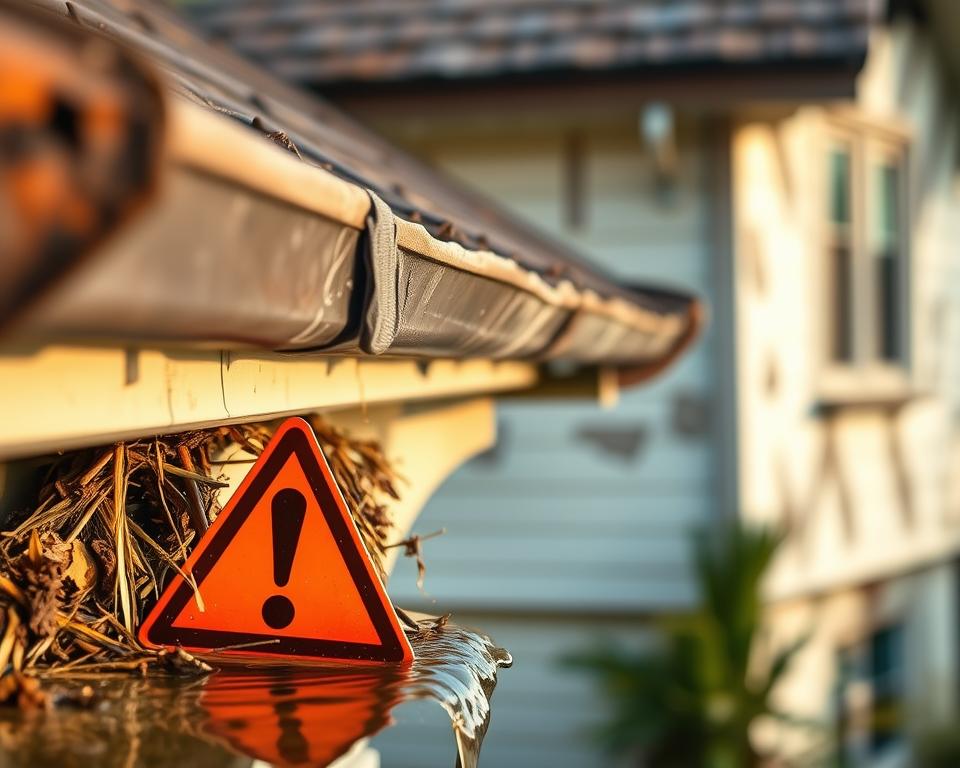
On the gutter itself, rust spots, pitting, and seam failures are easy to miss until you’re close. Cracked gutters and pinholes often leak in thin, constant lines that don’t show up until the fascia is already damp. If plants are growing in the channel, debris has likely held moisture there for weeks.
Mold near roofline or algae at the eaves can suggest trapped water and poor airflow. Indoors, basement dampness after storms, musty smells, or fresh water marks on walls can be the first sign that runoff is reaching places it shouldn’t.
| What you can see | What it often means | Where it can spread next |
|---|---|---|
| Water spilling over gutters during downpours | Clogs, poor pitch, or undersized flow capacity | Siding stains, slippery walkways, soaked landscaping |
| Sagging gutters or sections pulling away | Loose fasteners, heavy debris load, bent runs | Fascia rot, detached joints, falling hazards near entryways |
| Peeling paint on siding and discolored trim | Repeat wetting and trapped moisture against the wall | Wood decay, swollen trim, pests seeking damp shelter |
| Pools near foundation after rain | Downspout discharge too close or blocked outlets | Soil erosion, cracked paving, damp crawl spaces |
| Rust spots and cracked gutters at seams or corners | Metal fatigue, standing water, freeze-thaw stress | Hidden leaks behind fascia, rot at rafter tails |
| Mold near roofline and mildew marks under eaves | Persistent moisture and poor drainage at the edge | Indoor air quality issues, damp insulation, ceiling stains |
| Basement dampness after storms | Water pushed toward the home by overflow or poor runoff control | Wall staining, musty odors, damage to stored items |
If any of these signs appear after a major storm, timing matters. Debris impact can loosen brackets, twist downspouts, and open seams in a single night. When the symptoms move from the roof edge to the walls and indoors, delays can turn a manageable fix into a wider safety and moisture problem.
When Repair Is Not Enough and gutter replacement Becomes the Safer Option
Most homes hit a point where fixing gutters is not just about money. It’s about safety. A small leak or a corner that needs fixing can usually be fixed.
But, if damage is widespread or keeps coming back, it’s time to think about replacing. Corroded gutters might look okay but can be thinning and have pinholes. Patching then becomes a never-ending job.
When gutters fail over and over, it’s a sign of bigger problems. If they keep pulling away, the issue might be deeper. This could mean the fascia is getting wet.
Undersized gutters can’t handle heavy rain. This leads to water spilling over and damaging your yard. Even with sealed joints, water can cause stains and dampness.
Replacing gutters with your roof can prevent future problems. It ensures water flows correctly and doesn’t damage new roofing.
| Common Work Type | Typical Cost Range | Best Fit | Safety and Damage Risk if Delayed |
|---|---|---|---|
| Minor repairs or resealing | $150–$300 | Small seam leaks, corners, isolated drips | Lower risk, but leaks near the roofline can wet fascia and make surfaces slippery |
| Refastening or pitch correction | $200–$500 | Loose hangers, poor slope, standing water in the run | Moderate risk; repeated pull-off can signal deeper wood damage and higher fall risk from repeated ladder use |
| Sectional replacement | $300–$800 | One damaged length, localized dents, a failing joint area | Moderate risk; mismatched flow or missed soft spots can keep overflow going during storms |
| Downspout repair or replacement | $150–$400 | Crushed, disconnected, or leaking downspouts | Higher risk near foundations; poor discharge can contribute to basement damp and erosion along walkways |
Even if a repair seems cheap, it might cost more later. This includes water damage inside and structural issues. Add in the danger of working at heights, and it’s clear why full replacement is safer.
A professional can spot problems that aren’t obvious. This is important when deciding between repair, sectional replacement, or full replacement. Fewer trips up a ladder mean less chance of getting hurt.
Prevention Strategies That Reduce Safety Risks and Protect Property Value
Keeping up with a gutter maintenance schedule is key. Clean gutters twice a year, in spring and fall. After heavy rain or wind, do a quick check.
Look for signs of trouble like sagging gutters, loose screws, and water marks. These can mean big problems if not fixed.
Some homes need more care. If you have trees or hedges that drop a lot of leaves, clean out debris three to four times a year. Older roofs also shed granules that can block water flow.
Downspouts are critical. Clear them well, using a hose and a plumbing snake if needed. Make sure downspout extensions are 4 to 6 feet from the foundation to prevent water damage.
For extra security, get a professional gutter inspection. They can find issues like rust and leaks early. If you clean gutters yourself, use ladder safety rules to avoid falls.
Ladder accidents are serious. They send many to the hospital and cause deaths. So, it’s wise to hire professionals for tall homes or tricky spots.